As an expert in metal manufacturing and a parent who values safety above all else, I often get asked: "With so many options at the toy store, how do I actually pick a tricycle that won't fall apart after a month?"
Selecting the right trike is more than just picking a favorite color. It’s about understanding the engineering behind the toy. At NAT, we know that the integrity of metal components is what stands between a safe ride and a potential accident. In this guide, I’ll walk you through exactly what to look for when choosing your child’s first set of wheels.
The frame is the backbone of the tricycle. While plastic trikes are lightweight and cheap, they often lack the structural integrity needed for active toddlers. When I evaluate a trike, I look for a stamped steel frame. Why?
Lower Center of Gravity: Steel is heavier than plastic, which makes the tricycle less likely to tip over during sharp turns.
Impact Resistance: Kids aren't gentle. A steel frame can handle being dropped on the driveway or bumping into curbs without cracking.
Sustainability: Unlike plastic that ends up in a landfill, high-quality metal components can last for generations.
Tricycles aren't "one size fits all." You need to match the bike to your child's current motor skills. We generally categorize them into three stages:
Push Trikes (10-18 Months): These feature a parent handle and safety harness. The child is essentially a passenger.
Learn-to-Ride (2-3 Years): These allow the child to start pedaling while the parent still has a push bar for steering backup.
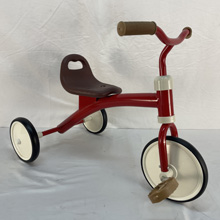
Classic Independent Trikes (3-5 Years): No bars, no harnesses—just pure, independent pedaling.
Pro Tip: Look for "All-in-One" convertible models. They might cost more upfront, but the modular design saves you money in the long run.
Safety is in the details. When you’re inspecting a trike, check these specific components:
| Feature | What to Look For | Why it Matters |
|---|---|---|
| Steering Limiters | A restricted turning radius | Prevents the handlebars from turning too sharply and causing a tip-over. |
| Pedal Grip | Non-slip surface or rubber coating | Keeps little feet from sliding off and getting caught in the wheels. |
| Tires | Rubber or EVA foam (not hollow plastic) | Provides better traction on various surfaces like grass or pavement. |
There is nothing more frustrating for a toddler than a trike they can't pedal. Before purchasing, measure your child's inseam and compare it to the distance from the seat to the pedals. I always recommend choosing a trike with an adjustable seat. As your child grows, you should be able to move the seat back to maintain a slight bend in the knee at the furthest point of the pedal stroke. This ensures comfortable riding and prevents muscle strain.
As someone in the stamped steel industry, I pay close attention to the joints and connections. Cheap trikes often use plastic bushings that wear out quickly, leading to "wobbly" wheels. Look for metal-on-metal connections or reinforced hardware. If the parts that hold the wheels and handlebars in place are flimsy, the steering will become unresponsive over time. A well-manufactured trike should feel solid, not "rattly."
Choosing the right tricycle is an investment in your child's physical development and confidence. By focusing on durability, ergonomics, and high-quality materials, you ensure that their first experience with mobility is a safe and joyful one. If you are looking for a trike that lasts, skip the "disposable" plastic options and look for the strength steel big wheel tricycle.
Are you interested in how precision-engineered metal parts create safer products? Visit NAT Stamped Steel to learn more about our commitment to quality manufacturing and durability.
 EN
EN