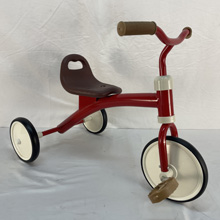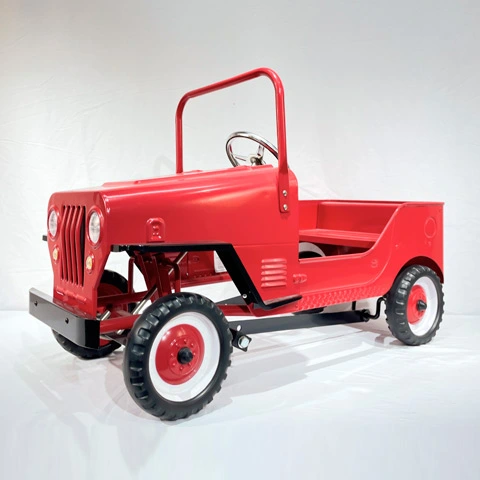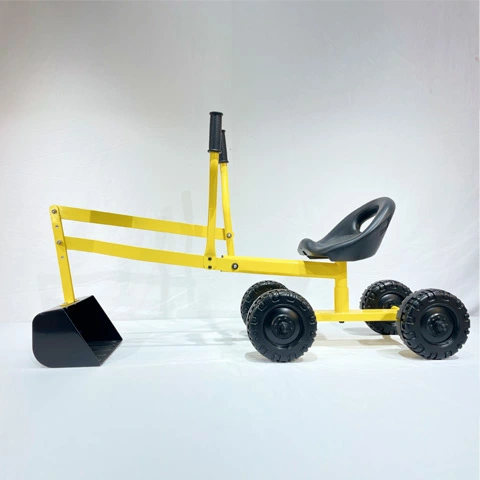
As someone who spends my days surrounded by precision engineering and high-quality metal manufacturing at NAT Stamped Steel Products, I tend to look at children's toys through a different lens. When I see a tricycle, I don’t just see a plaything—I see the structural integrity of the frame, the smooth rotation of the bearings, and the safety of the assembly.
But for most parents, the big question isn't about the gauge of the steel; it’s simple: "What’s a good age for a tricycle?"Choosing the right time to introduce a trike involves a mix of physical development and selecting the right equipment. Let’s break down the journey from a toddler's first seat to independent riding.
Believe it or not, the journey can start as early as 10 months. At this age, a child isn't actually "riding" in the traditional sense. This is the era of the convertible "grow-with-me" tricycle. At this stage, your child is working on:
Core Stability: Learning to sit upright while the world moves.
Grip Strength: Holding onto the handlebars (even if they aren't steering yet).
Spatial Awareness: Getting used to the height and movement of a wheeled vehicle.
My Professional Tip: Look for a model with a sturdy parent push bar. During this phase, you are the motor, and the trike is essentially a more exciting stroller.
This is the "transition" period. Most toddlers at this age have the gross motor skills to start experimenting with their feet, but they may not yet grasp the "circular" motion required to pedal. How to tell if your child is ready for the next step:
Leg Length: Can they reach the pedals comfortably without stretching?
Interest: Do they try to push the trike forward using their feet on the ground (like a balance bike)?
Coordination: Can they sit, hold the handles, and follow a simple direction simultaneously?
From a tricycle manufacturer perspective, this is where frame integrity becomes vital. As kids get more active, they put more stress on the trike's joints. A flimsy plastic frame won't cut it once they start getting aggressive with their steering.
For the vast majority of children, age 3 is the "Golden Age" for tricycles. By age three, most children have developed the leg strength and the reciprocal coordination (moving one leg after the other) required to pedal independently. This is a massive milestone for their confidence!
When your child starts pedaling on their own, the "wear and tear" factor skyrockets. They will bump into curbs, drop the bike on the driveway, and likely leave it out in the rain.
| Feature | Plastic Tricycles | Stamped Steel Tricycles |
|---|---|---|
| Durability | Prone to cracking and sun damage | High impact resistance; lasts for years |
| Stability | Very light; easier to tip over | Heavier base; much harder to tip |
| Longevity | Usually ends up in a landfill | Can be passed down to siblings |
| Safety | Parts can snap under weight | Structural integrity remains consistent |
At NAT, we understand that stamped steel components offer a level of safety and "heft" that plastic cannot match. A heavier steel frame lowers the center of gravity, making the tricycle much more stable for a wobbly beginner.
While "3 years old" is the standard answer, every child is different. Before you buy, run through this quick checklist:
The Reach Test: Have your child sit on the seat. Their feet should be flat on the pedals at the furthest rotation point with a slight bend in the knee.
Strength: Can they push a heavy toy across the carpet? If so, they likely have the leg power to pedal.
Instruction Following: Riding a trike requires following safety rules. Ensure they can follow 2-step directions like "Stop" and "Look."
Regardless of whether your child starts at 18 months or 3 years, safety is the foundation of fun.
The Helmet Rule: Start the habit on day one. If they are on wheels, they are wearing a helmet.
Surface Matters: Start on flat, smooth pavement. Avoid grass (too much resistance) or gravel (too slippery) for beginners.
Check the Hardware: Periodically check the bolts and the frame. As experts in metal manufacturing, we always remind our clients that even the best steel needs proper assembly to stay safe.
So, what’s a good age for a tricycle? While the journey can start as a passenger at 18 months, the 3-year mark is when the real magic of independent riding happens. By choosing a tricycle built with high-quality, durable materials—like those utilizing precision stamped steel components —you aren't just buying a toy; you're providing a safe, stable platform for your child to explore their world. Interested in how precision metal parts make everyday products safer? Explore our work at NAT and see how we prioritize quality in every stamp.
 EN
EN